In the intensely competitive realm of contemporary professional drifting, podium finishes is not merely solely a function of sheer engine power or driver aggression. Rather, it has evolved into a intricate discipline that demands a scrupulous blend of choosing a proven car, outfitting it with the highest-quality competition parts, and, most critically, grasping its dynamic behavior on the circuit through advanced drift telemetry software. This definitive handbook functions as your blueprint starting from the initial idea of a project car through to the final engineering-refined adjustments that turn a powerful vehicle into a predictable winner. We will examine in detail the precise engineering of car suspension tuning, illustrating how a state-of-the-art suspension tuning tool like a dedicated telemetry system eradicates assumptions and offers unparalleled visibility into your chassis's true behavior.
The bedrock of any great drift machine is, indisputably, the base vehicle itself. Certain cars have attained legendary reputation within the worldwide oversteer community due to their inherent weight distribution, durable design, and the vast range of performance components available. Picking the right platform is the initial and most significant selection a driver will make. For instance, the BMW's E36 3 Series is universally acknowledged as among the greatest balanced drift cars of all time. Its near-perfect balanced front-to-rear weight, combined with a driven rear axle setup and robust six-cylinder motors, creates a chassis that is both forgiving for beginners and highly capable in the hands of a professional driver. The evolution of this lineage, the BMW E46, builds upon these strengths with a more developed frame, increased stance for greater confidence, and still a greater degree of lock directly from the manufacturer. Another formidable option in the top-level scene is the Corvette C6.
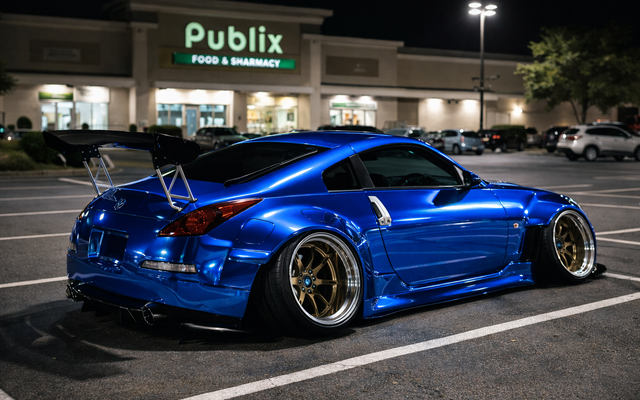
This V8-powered performance car brings a unique combination of strengths to the sliding discipline, including a lightweight alloy frame, a transaxle-style gearbox and differential unit that contributes to an perfect front-to-rear mass ratio, and the tremendous torque of a large-displacement GM LS engine. This blend renders it an absolute force on track, able of initiating and sustaining extended drifts with seemingly minimal use of throttle. For drivers looking for exceptional performance per dollar, the 350Z model Nissan stands out as a excellent choice. It arrives from the manufacturer with a stiff platform, a effective factory locking differential, and the free-revving V6 powerplant that provides plenty of power and torque for practicing and advancing in the discipline. Its newer version, the Nissan 370Z, presents further improvements in chassis stiffness, handling precision, and overall powerplant power, establishing its position as a common choice among professional competitors. Additional legendary cars that warrant consideration are the lightweight unique Mazda FC RX-7, the ever-present Nissan S13 240SX, the V8-powered Ford SN95, the more recent BMW E90, and the small yet surprisingly playful and teachable MX-5 Miata. All of these platforms offers a unique set of traits, complexities, and potentials, but they all have in common the basic ingredients required to serve as a competitive drift machine.
However, picking the optimal chassis is only the starting point. To access the true capability of every of these machines, significant upgrades to the steering system and chassis control systems are absolutely non-negotiable. This is where the realm of specialist drift-spec hardware comes into sharp view. The one most game-changing improvement for a dedicated drift car is the fitting of a maximum-angle angle modification kit. These engineered assemblies, such as those developed by industry leaders like SLR Speed, are engineered to dramatically enhance the car's available lock-to-lock rotation. A OEM road car is highly constrained in how far its tires can pivot, a safety limitation for daily operation. In oversteer driving, conversely, aggressive steering input is frequently necessary to control and hold a drift. An steering kit substitutes the factory steering knuckles, tie rods, and potentially A-arms with pieces that permit the front tires to reach degrees of turn in excess of 70 or even 80 degrees, compared to a normal OEM limit of around 40 to 50 degs.
This vastly increased capability offers the pilot with dramatically more authority during a slide, allowing it to be far more straightforward to begin a drift, sustain it through a long bend, and switch smoothly from one side to the opposite. The contrast in drivability is truly transformative. Coupled with a properly specified steering kit is the equally vital modification to the vehicle's spring and damper setup. Store-bought or even expensive road dampers are just not designed for the particular and harsh demands of competitive oversteer. A purpose-built system of adjustable dampers is paramount. These engineered dampers have specific valving and spring stiffness that are optimized for the rapid weight transfer that is typical of drifting. When a operator initiates a angle, the vehicle's inertia is thrown violently to the outside of the turn. Proper competition coilovers control this shift in a consistent fashion, allowing the car to settle rapidly and offering the driver accurate feedback through the wheel and cockpit. They also enable precise tuning of stance, damping firmness, and weight balance, which are all integral aspects of optimizing the vehicle's behavior to a given track or piloting approach. Together, a precision-engineered angle modification system and a expertly specified system of performance coilovers form the undeniable hardware cornerstone upon which all subsequent optimization is constructed.
Once the essential hardware is installed, the subsequent essential step in the development is the meticulous adjustment of the car's suspension geometry. This is the world of car suspension tuning, a process that can appear intimidating to the newcomer but is, in practice, the defining factor to transforming a collection of fast pieces into a unified and predictable machine. The most discussed aspect of suspension geometry for sliding is undoubtedly camber. Camber is the angle of the wheel in relation to the upright plane when observed from the front-on of the car. If the top edge of the tire is angled towards the chassis, this is called negative camber. For drifting, negative camber on the front wheels is universally employed and is considered essential. The reason is fundamentally tied to physics.
When a car is turning at limit slip angles, the chassis tilts to the outside of the turn. This lean forces the outer steering tire to diminish its optimal footprint with the tarmac. By introducing inward lean, the wheel is pre-tilted to compensate for this roll. As the chassis leans into the corner, the tire becomes more upright on the track, maximizing its grip at the critical moment when it is needed most for steering authority. Typically, front axle camber settings for a dedicated drift car fall between approximately -3 degrees to as high as -5 degrees or even greater, depending on the parameters of the vehicle configuration, rubber choice, and operator style. The rear tires also use inward lean, but the settings are typically more modest and subtler than the front. Excessive camber at the rear can cause the vehicle to excessively tail-happy and challenging to manage on throttle input, as it diminishes the effective tire footprint of the driving tires during straight-line throttle application. Hence, rear axle angles are frequently in the ballpark of -1 degree to -3 degrees, striking a delicate balance between offering sufficient side bite to assist in initiating and holding the slide while also maintaining good hook-up for power-down the turn. camber angle is merely one element of the broader tuning picture, which additionally encompasses toe angle, self-centering steering, and bump steer adjustment.
Toe refers to the angle of the wheels when viewed from above. Toe-in means the front edges of the wheels are closer together than the rear edges, while toe-out means the converse. For oversteer, a modest amount of front axle negative toe is frequently employed to quicken the initial steering response, making the car feel more agile and ready to begin a drift. Rear toe is typically set to neutral or a incredibly small amount of inward toe to promote stability under throttle. self-centering is the forward or aft angle of the kingpin axis when viewed from the lateral of the vehicle. Increased caster angle increases feedback and stability confidence, and it additionally increases camber increase during steering, which is very useful. Tuning these values is a detailed dance where a change to one value can and often will impact the other settings. The old-school approach for dialing in a vehicle's alignment for competition has long been a tedious affair of guesswork and adjustment. A tuner or crew would apply a modification based on intuition, drive the car on track, rely on the driver's subjective feel and feedback, and then make an additional tweak. This process would iterate time after time until the chassis felt "acceptable" or the scheduled testing session was exhausted. This methodology is not only incredibly wasteful in terms of man-hours and costs, but it is additionally inherently car alignment tuning imprecise.
Human sensation is a famously inconsistent metric, influenced by numerous variables such as tiredness, changing track grip levels, ambient heat, and just the mindset of the driver on that specific session. What feels "tail-happy" on one run might feel "tight" on the next pass, leading to contradictory information and counterproductive adjustments. This age-old limitation in chassis setup is specifically where contemporary technology has made its mark to completely change the process.
The development and adoption of advanced drift telemetry software has introduced a completely new era for tuning and refining competitive sliding vehicles. These platforms, represented by cutting-edge solutions like modern telemetry hardware, work by physically recording the live dynamic movement of the vehicle as it is operated on the track. In contrast to relying on personal feel, these systems acquire quantifiable metrics on key factors such as shock absorber movement, wheel speed, acceleration forces, steering angle, and driver input application. This collected telemetry is then processed by advanced software that can graph and decode the information in a comprehensible format. For the first time, engineers and teams can observe specifically what the car is performing at each point of a drift. This ability revolutionizes the entire alignment optimization workflow. Consider the particular task of setting the front camber for a specific vehicle. Instead of making a adjustment from -3 degrees to -3.5 degrees and then testing many passes to try and "feel" a difference, a vehicle dynamics tool can give real-time and definitive feedback. The application can display in a chart how the suspension's loading is behaving during the critical phases of a slide: turn-in, holding the angle, and changing direction. It can reveal if the current camber setting is allowing the outside front tire to maintain maximum grip or if the rubber is over-stressed on its outside shoulder.
The tool can after analysis suggest data-driven recommendations for change. Perhaps the data shows that the tire is still stressing its edge at -3.5 degrees of negative vehicle dynamics tool camber, indicating that a move towards angle, say -4 degrees, might be warranted. Alternatively, the information might reveal that the tire is failing to reaching heat or that the inner shoulder is wearing unevenly, which could suggest that there is excessive negative camber and a small decrease back to -3.2 degrees would be more efficient. This level of granularity and actionable intelligence was simply unimaginable in the days of pure mechanical tuning.
The impact of using a dedicated suspension tuning tool extends well beyond only optimizing camber. It serves as an invaluable suspension tuning guide that is customized to your exact car. When setting the shock absorber values on your coilovers, instead of depending on imprecise guidelines or replicating another team's settings, you can use the software to see how the car is performing in relation to your changes. The software can display the damper movement data over a section of track, showing if the coilovers are managing the weight transfer effectively or if they are causing the car to become unsettled uncontrollably after a flick. It can assist in pinpointing issues like bottoming out or topping out, permitting you to introduce informed decisions to helper springs, damping values, or ground clearance. This approach translates similarly to the intricate process of suspension geometry optimization. Beyond camber angle, the software can give analysis into how changes to toe settings and caster angle are influencing the car's stability during specific parts of a lap. For example, it can help you to determine the optimal amount of front axle toe-out for your individual steering rack geometry and piloting approach by measuring the quickness of initial reaction and the predictability of the vehicle at full countersteer. This transforms the system an exceptionally powerful performance optimization handbook that is constantly updated by the live behavior of your personal chassis on the circuit. It elevates the entire process from a subjective skill into a repeatable engineering process.
Additionally, the application of a system like data acquisition is not limited to expert tuners with extensive resources. For the grassroots enthusiast, it serves as an powerful educational tool. It effectively offers the driver with the insight of a expert race engineer without requiring the corresponding expense. It coilover setup tips accelerates the learning curve by providing clear solutions to challenges that would otherwise take years of experimentation to answer. A builder can learn how their specific chassis responds to specific adjustments, building a deeper knowledge of car control in the endeavor. It also democratizes advanced chassis dynamics concepts, permitting all drivers with the ambition to optimize their car to achieve it in a structured and successful manner. This is especially valuable in a sport like sliding, where engineering know-how has in the past been a closely guarded commodity among elite teams. Now, that power can be in the garage of any motivated driver.
In summary, the path to engineering and dialing in the ideal championship-contending drift car is a comprehensive project that seamlessly blends classic hardware knowledge with revolutionary digital solutions. It starts with the strategic pick of a capable chassis, then built upon the integration of critical drift-spec components like drift-spec steering angle kits and properly selected competition suspension units. The journey then advances into the intricate realm of chassis dynamics adjustment, where settings like negative camber, toe, and caster angle are carefully adjusted to suit the vehicle's modified capabilities and the pilot's personal technique. The final step, and what genuinely differentiates the modern process from the past, is the adoption of a sophisticated vehicle dynamics tool. This tool removes the approximation and inefficiency of solely seat-of-the-pants setup by giving objective, live information on how the vehicle is truly functioning. It acts as an unparalleled engineering partner, a comprehensive alignment optimization handbook, and a master performance analyzer. As a complete package, this holistic methodology guarantees that all aspect of the drift car—from the choice of the car to the most minute click on the coilover—is refined for ultimate success on the track. It signifies the complete progression of the art of drifting, bridging raw car control with data-informed vehicle setup to create the most effective cars imaginable.